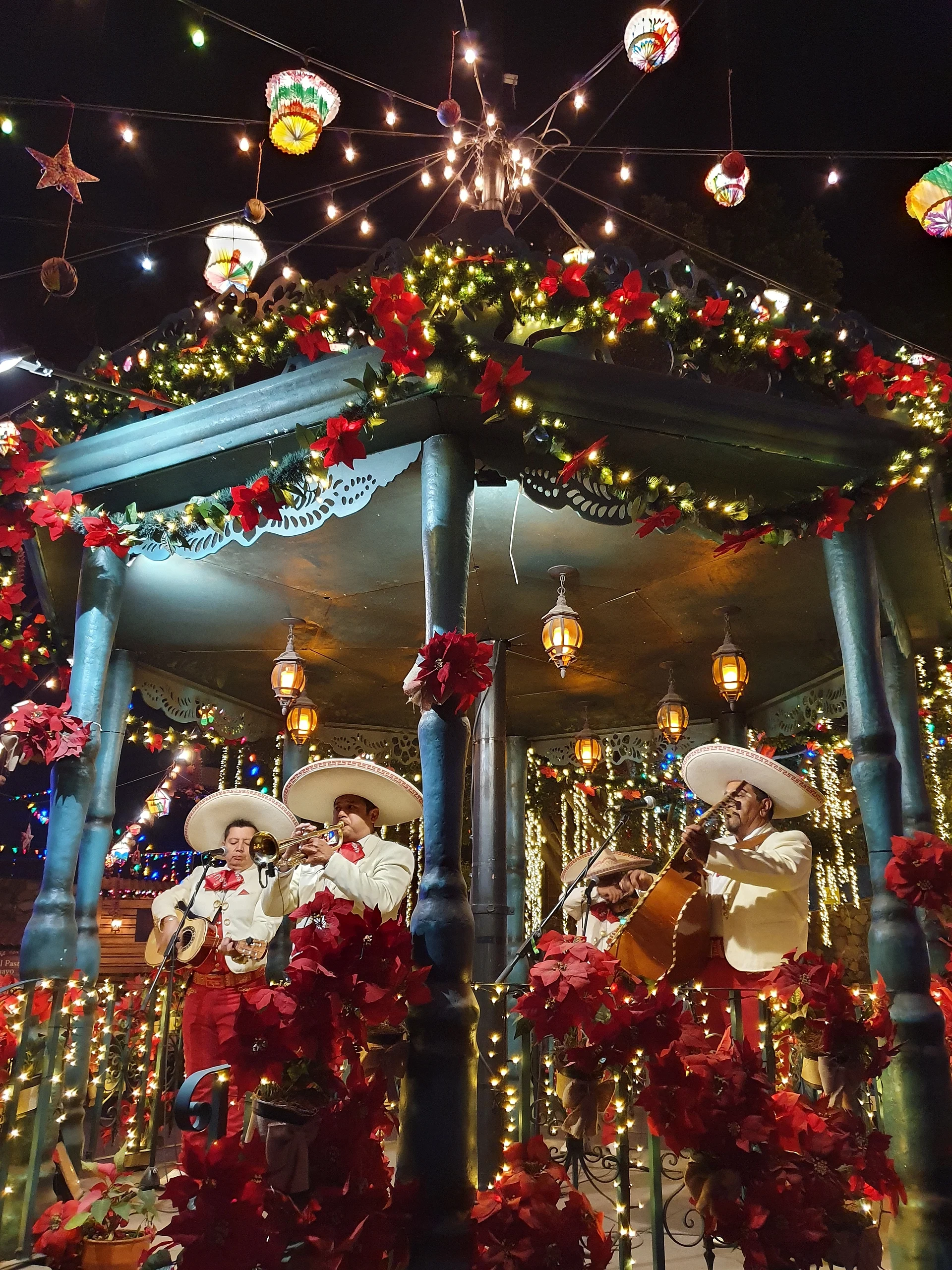
Mariachis play in a kiosk hung with poinsettias, paper lanterns and lights during the posadas, Teotihuacán, Estado de México

Photo by Karycalde, CC BY-SA 4.0, via Wikimedia Commons

Dec 16 – 24, 2026

Posadas 2026: the nine nights, date by date

Nine posadas, one a night from December 16 to Christmas Eve. Here is what each night stands for, what happens at the door and around the piñata, and which days are actually off work.

Remind me before Posadas: Posadas dates

The posadas always fall on the same dates: December 16 to 24, nine nights that stand for the nine months Mary waited, or, in another telling, the nine days of the walk from Nazareth to Bethlehem. In 2026 the first falls on a Wednesday and the last, on Christmas Eve, on a Thursday. Each night re-enacts the same scene, Mary and Joseph knocking on doors in search of a room, and ends with the same party.

Many parishes and families also dedicate each night to a virtue, to reflect on during the prayers. The nine virtues are the same everywhere (humility, strength, detachment, charity, trust, justice, purity, joy and generosity) but their order varies from one source to another; the schedule below follows the list of the Archdiocese of Azcapotzalco in Mexico City. Treat it as one parish's calendar, not a rule.

Where the posadas come from

By the most told account, in 1587 (some sources say 1586) Fray Diego de Soria, prior of the Augustinian monastery of San Agustín Acolman, near Teotihuacán, obtained permission from Pope Sixtus V to celebrate nine misas de aguinaldo from December 16 to 24. They were held outdoors, with processions, songs, nativity scenes and small gifts for those who came. The friars were also teaching new converts, and the custom is often linked to the Mexica festival of Panquetzaliztli, held for Huitzilopochtli at the same time of year.

The masses moved from churches to haciendas and private homes, and by the 19th century the posadas had their modern shape: a procession through the neighborhood, the sung request for shelter, and a party. Acolman still claims to be the birthplace of both the posadas and the piñata, and its 16th-century monastery is open as a museum.

How a posada works

A clay jarrito of ponche navideño with guava, tejocote, apple and cinnamon
Photo by ProtoplasmaKid, CC BY-SA 4.0, via Wikimedia Commons

Pedir posada. The guests split in two. The pilgrims go outside with lit candles, sometimes carrying figures of Mary and Joseph (or two people dressed as them), and sing the verses of the litany asking for a room; the innkeepers answer from inside that there is none and that they should move on. The verses go back and forth until Joseph says who they are, and the door opens with the song of welcome. In many homes everyone then prays the rosary before the nativity scene.

The piñata. The traditional one is a clay pot covered in paper with seven cone-shaped points. Each child takes a turn, blindfolded and spun around, while everyone sings for them to hit it. The meaning the friars gave it is still told: seven points for the seven deadly sins, bright colors and tinsel for temptation, the blindfold for faith, the stick for the virtue that breaks the sin, and the fruit and sweets inside as the reward.

The aguinaldo and the ponche. Children get a bag of sweets, peanuts and fruit, the aguinaldo. Adults drink ponche, a hot punch of tejocotes, guava, sugarcane, apple and other fruit simmered with cinnamon and piloncillo, often with a shot of rum or tequila. Tamales, pozole, buñuelos and atole fill out the table, and sparklers come out at the end.
Posadas and pastorelas

A pastorela is a Christmas play: shepherds set out for Bethlehem after the angel's announcement, devils try every trick to stop them, and good wins in the end, usually with a lot of comedy along the way. It comes from the same root as the posadas, the dramatized Christmas story the friars used to teach, and it is staged by parishes, schools and theater companies all through December.

The best known is in Tepotzotlán, north of Mexico City, where a company of about sixty has put on a pastorela every December since 1963 in the courtyard of the old Jesuit college. Its evenings run nightly in the week before Christmas and end the way a posada does, with the audience going out to pedir posada, breaking piñatas and sitting down to supper.

Are the posadas holidays?

No. Of all these dates, only December 25 is a mandatory rest day under article 74 of the Ley Federal del Trabajo; in 2026 it falls on a Friday, which makes a long weekend. Employees who work it are owed double pay on top of their salary. December 24 is a working day, and so is December 12, the feast of the Virgin of Guadalupe, even though it fills the Basílica.

What does stop is school. The SEP's 2026-2027 calendar gives public schools their winter break from Monday, December 21, 2026, to Wednesday, January 6, 2027, so the last four posadas fall in the holidays and the roads and pueblos near the big cities get busier from then on.

Day by day, 2026

  1. First posada: humility

    The posadas begin. This was also the first day of the misas de aguinaldo the Augustinians said in Acolman in the 1580s. In Tepotzotlán the pastorelas are already running, and in Tlalpujahua the ornament fair is in its last days.

  2. Second posada: strength

    The second night of pilgrims and innkeepers. In the classic form the procession goes to a different house each night, led by someone carrying a candle inside a paper lantern.

  3. Third posada: detachment

    In Oaxaca city this is also the feast of the Virgen de la Soledad, the city's patroness, with calendas (street processions) and buñuelos.

  4. Fourth posada: charity

    Midpoint of the novena. Acolman's four-day piñata fair has fallen on these days in some recent years (December 19 to 22), though in others it came earlier in the month.

  5. Fifth posada: trust

    The fifth night falls on a Sunday; the SEP's winter break for public schools starts the next day, Monday, December 21, 2026.

  6. Sixth posada: justice

    The sixth night, around the winter solstice: the longest night of the year.

  7. Seventh posada: purity

    The seventh night. In some processions children walk dressed as angels and shepherds and carry poinsettias, and a few towns bring a real donkey for Mary.

  8. Eighth posada: joy, and the Noche de Rábanos

    The eighth night. In Oaxaca city the zócalo holds the Noche de Rábanos, where oversized radishes are carved into whole scenes. In Tepotzotlán it is the last night of the pastorela season in recent years.

  9. Ninth posada and Nochebuena: generosity

    The last posada, on Christmas Eve. This time the door opens to the Nativity: the Child is laid in the nacimiento, many families go to the midnight misa de gallo, and the late dinner is the big one of the year, with bacalao, romeritos, turkey or ham, ponche, and sparklers for the children.

  10. Christmas Day: the official holiday

    The posadas are over. December 25 is a mandatory day off under the federal labor law; it is a quiet, family day.

Where to go

Photo by Henrique Ferreira on Unsplash

Acolman, Estado de México

Teotihuacán

Where the posadas began: the Augustinian monastery of Acolman, now a museum, held the first misas de aguinaldo in the 1580s. The town's Feria de la Piñata takes four days in December.

When
The fair's dates change each year; check the municipality's announcement in November.
Getting there
About 43 km northeast of Mexico City on highway 132, a few minutes before the pyramids.
Where to stay
Hotel Central Hotel · 1.4 km from the center Find on Expedia Hotel Primavera Hotel · 1.6 km from the center Find on Expedia Hotel Boutique Yaocalli Hotel · 1.6 km from the center Find on Expedia
See them all on Expedia Booking.com
Vacation rentals on Vrbo Airbnb
Tours on Viator GetYourGuide

Full guide to Teotihuacán → · Sources: Acolman (Wikipedia)

Photo by Rafael Aparicio, CC BY-SA 3.0, via Wikimedia Commons

Estado de México, north of Mexico City

Tepotzotlán

The pastorelas: every December since 1963, a shepherds' play with ponche, a posada, piñatas and supper in the courtyard of the old Jesuit college.

When
In recent years nightly from about December 13 or 14 to December 23.
Getting there
About 45 minutes from Mexico City by the México–Querétaro highway, or the Tren Suburbano to Lechería and a local bus.
Where to stay
Hotel Posada San José Hotel · 360 m from the center Find on Expedia Hotel Posada La Estancia Hotel · 1.3 km from the center Find on Expedia CityExpress - Tepozotlán Hotel · 2.0 km from the center Find on Expedia
See them all on Expedia Booking.com
Vacation rentals on Vrbo Airbnb
Tours on Viator GetYourGuide

Full guide to Tepotzotlán → · Sources: La Pastorela de Tepotzotlán: 60 años de tradición navideña (El Universal)

Places to see nearby

  • Ex Convento de Acolman · near Teotihuacán A 16th-century Augustinian monastery with a fine Plateresque facade, cloister murals and a viceregal museum.

Questions

When are the posadas in 2026?

From December 16 to December 24, 2026: nine nights, from a Wednesday to a Thursday. The dates never change. Office and school parties called posadas can be held any day in December, but the traditional novena is always these nine nights.

Why are there nine posadas?

The usual explanation is that each night stands for one of the nine months Mary carried Jesus; another says they are the nine days of the journey from Nazareth to Bethlehem. Historically, nine is the number of misas de aguinaldo the friars of Acolman were allowed to say before Christmas.

What virtue is each posada dedicated to?

One common list, from the Archdiocese of Azcapotzalco: December 16 humility, 17 strength, 18 detachment, 19 charity, 20 trust, 21 justice, 22 purity, 23 joy and 24 generosity. Other parishes use the same nine virtues in a different order.

Is December 24 a day off in Mexico?

Not by law. The federal labor law's mandatory rest day is December 25; December 24 is a regular working day, and December 12 is not an official holiday either. Public schools are usually on their winter break by then.

Where did the posadas start?

In Acolman, in the State of Mexico, by the most told account: in 1587 the Augustinian friars there received papal permission to say nine misas de aguinaldo from December 16 to 24, and the posadas grew out of them. The same friars are credited with the seven-pointed piñata.

Sources

More Day of the Dead guides

Christmas posadas 2026 in Mexico's Pueblos Mágicos Tepotzotlán pastorelas Tlalpujahua's Feria de la Esfera Chignahuapan's Feria del Árbol y la Esfera Noche de Rábanos (Oaxaca) Near Mexico City

Links open a partner site. We may earn a commission if you book, at no cost to you. See festivals in every Pueblo Mágico, month by month →