When do the posadas start in 2026?
On December 16, a Wednesday, and the ninth and last is on December 24, a Thursday, Christmas Eve. That is one posada a night for nine nights, for the nine months Mary waited. Offices, schools and groups of friends often hold their own posada party on any convenient day in December, but the traditional ones fall on these dates.
What happens at a posada?
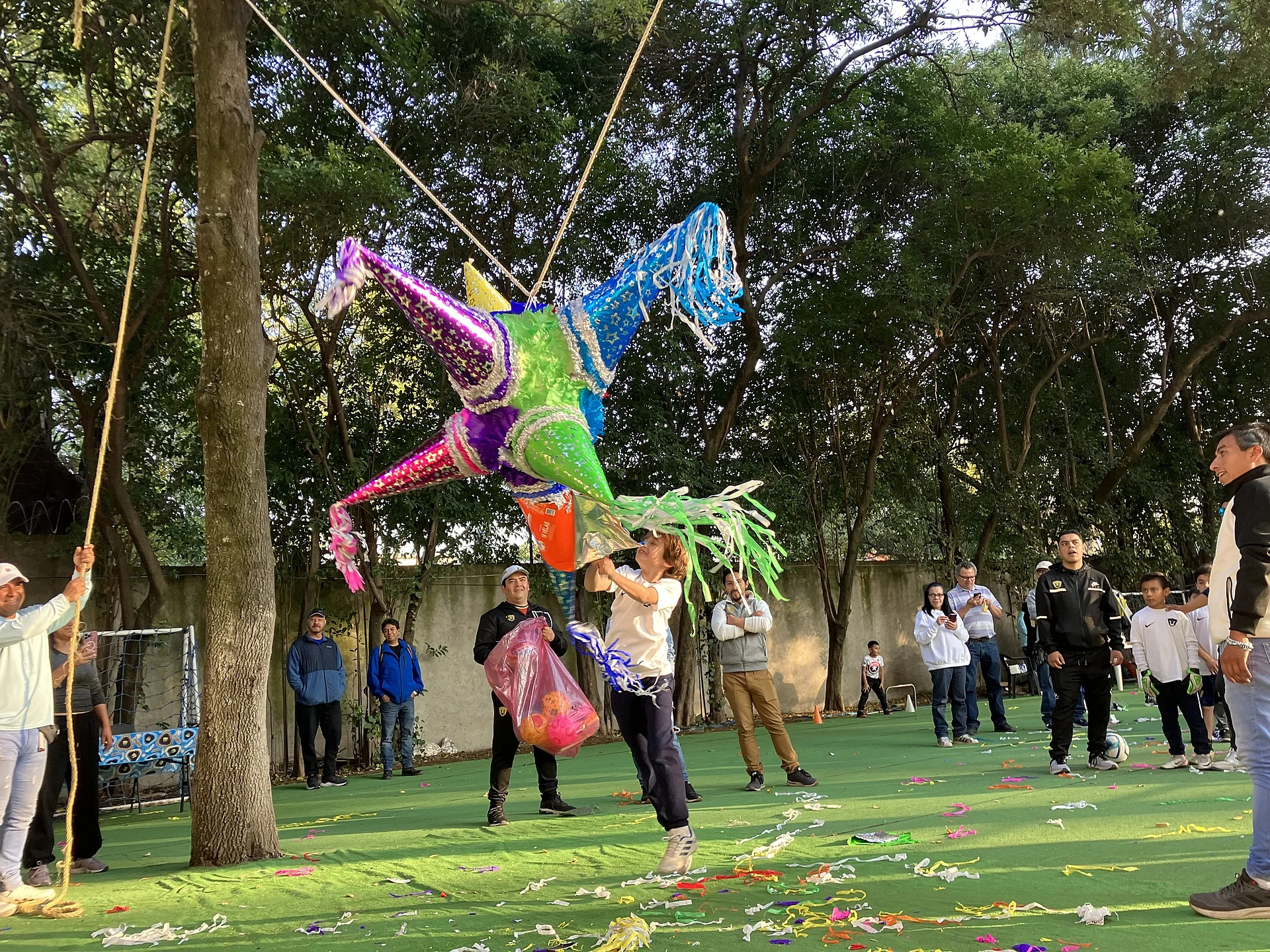
Guests split into two groups. The pilgrims go outside with candles, sometimes carrying figures of Mary and Joseph, and sing verses asking for shelter; the innkeepers inside sing back that there is no room. After a few verses the door opens, everyone comes in, and many families pray before the nativity scene. Then the party: ponche, tamales or pozole, buñuelos, a bag of sweets (the aguinaldo) for the children, sparklers, and the piñata.
What does the piñata mean?
The friars who used it to teach gave it a meaning that is still repeated: the seven points are the seven deadly sins, the bright colors and tinsel are temptation, the blindfold is faith, the stick is the virtue that breaks the sin, and the fruit and sweets that fall out are the reward. The traditional posada piñata is a clay pot covered in paper with seven cone points; today many are papier-mâché all the way through.
What is ponche?
The hot fruit punch of every posada: tejocotes, guava, sugarcane, apple, prunes or tamarind, depending on the house, simmered with cinnamon and sweetened with piloncillo. Adults often add a shot of rum or tequila, called the piquete.
Is December 24 a holiday in Mexico?
No. The official rest day under article 74 of the Ley Federal del Trabajo is December 25; December 24 is a normal working day. December 12, the Virgin of Guadalupe, is not an official holiday either. Public schools are already on their winter break by the last posadas.
What is the difference between a posada and a pastorela?
A posada is a neighborhood party with a procession, a song and a piñata, held in homes and streets. A pastorela is a play: shepherds on their way to Bethlehem, devils trying to lead them astray, an angel to save them, usually with plenty of comedy. Both grew out of the misas de aguinaldo of the 16th century. Tepotzotlán's evenings include both: first the play, then everyone goes out to pedir posada.