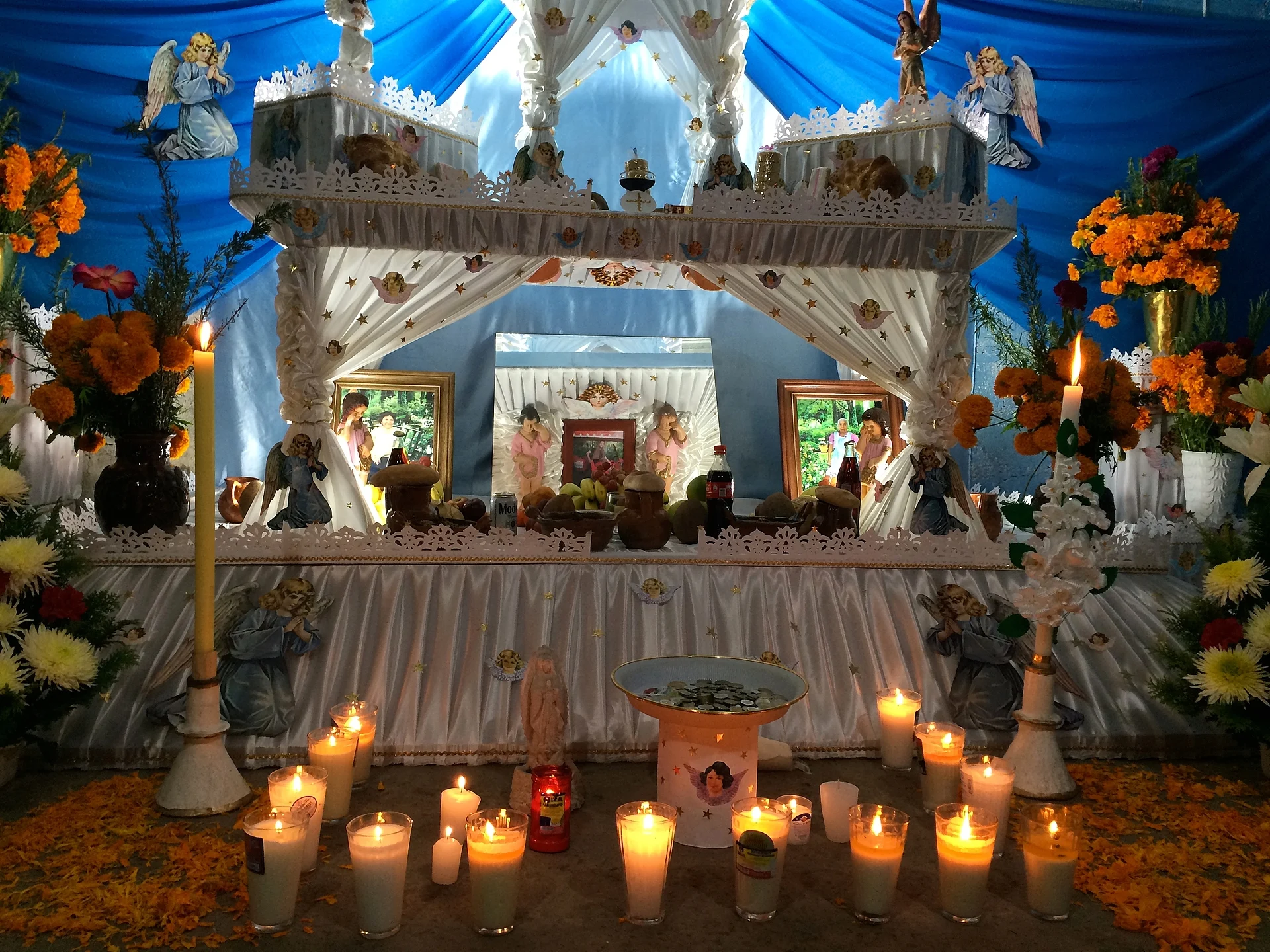
Every altar follows the same plan, read from the floor up. The lowest tier is the earthly world: the dead person's photograph, placed so that you see it only in a mirror, surrounded by the food, drink and objects they liked. Locals explain the mirror in different ways, as the soul that cannot be seen directly or as a doorway to the other side. Small ceramic figures called lloroncitos, the mourners, flank the image. The middle tier is heaven, with angels, the Virgin and a chalice, and white satin folded to look like clouds; the candles here are now often electric lights. At the top sits a crucifix. For a child, a Niño Dios takes the middle tier and sugar figures, alfeñiques, are added.
Around the tower go papel picado, wax candles pinched by hand into scales (ceras escamadas), painted clay candleholders and incense burners, baskets of flowers and the cloth bouquets that friends and relatives bring. Copal is burned over the whole offering when the dead are welcomed. The cost is serious: recent reports put a monumental altar at 15,000 to 30,000 pesos or more, and locals say it is more expensive to die than to be born. Some houses also set a small altar outside, the ánima sola, for the dead no one remembers. In 2025 one altar was even raised for a 94-year-old neighbor, still alive, who asked to see how she would be honored.