Town Cuencamé, Durango
Pancho Villa's land of generals: it has kept the Señor de Mapimí crucifix since 1715 and every August welcomes ox-cart pilgrims from Jimulco.
From Torreón: about 1 h 30 min by road (~105 km) How to get there ↓
Plan your visit to Cuencamé
Where to stay near Cuencamé
Compare hotels, posadas and guest houses in Cuencamé.
Tours to Cuencamé
Day trips around Durango sometimes stop in Cuencamé; a tour is the easy way to see it without a car.
Links open a partner site. We may earn a commission if you book, at no cost to you.
About Cuencamé
Cuencamé de Ceniceros is a town of 11,585 people (2020 census) at 1,580 metres in the semi-desert of eastern Durango. The founding act of the Indigenous village dates from 23 January 1598; in 1601, when silver was found in the hills, the Real de Minas de San Antonio de Cuencamé grew up next to it. It became one of the most populous mining towns of Nueva Vizcaya and sat at a junction of the Camino Real de Tierra Adentro, on the branch between Zacatecas and Parral. At the Noria de Pedriceña, now within the municipality, Benito Juárez gave the independence cry on the night of 15 September 1864.
The nickname Land of Generals comes from the Revolution. As early as 1909, the villagers of San Pedro de Ocuila rose against the Sombreretillo hacienda, which had taken their land, and on 20 November 1910 Calixto Contreras took up arms for Madero. With him and with Severino Ceniceros, whose surname the town now carries, local men joined Pancho Villa's División del Norte; more than twenty generals came from here. In December 1915 Carranza's troops burned Cuencamé and Ocuila. A monument on the plaza honours the generals, and a community museum in the bandstand tells the story.
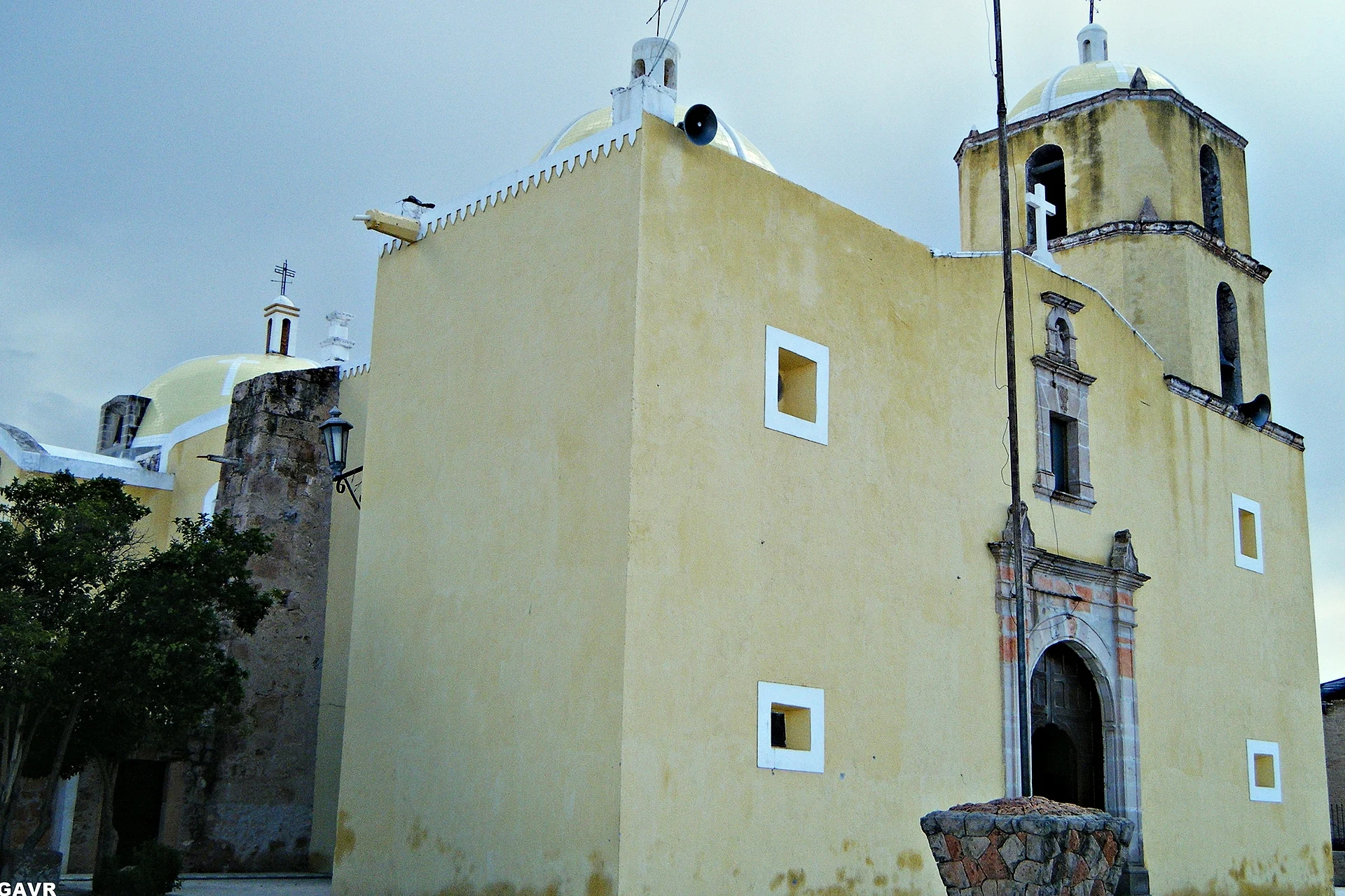
The 18th-century parish church of San Antonio de Padua stands on a raised atrium reached by steps from the plaza, with a two-stage tower crowned by a dome and lantern. At the crossing are two Baroque altarpieces: an ungilded wooden one for the Señor de Mapimí and another for the Virgen del Refugio. The crucifix arrived on 6 August 1715, brought by soldiers from Mapimí after raids emptied that mining town, and tradition says it grew too heavy to move whenever anyone tried to take it back. The town's churches belong to the Camino Real de Tierra Adentro World Heritage Site (2010), including the Sanctuary of Guadalupe, once part of the Franciscan convent of the Purísima Concepción. On 12 December, the Virgin's day, families light torches on their rooftops in memory of the 1915 fire.
How to get to Cuencamé
Cuencamé sits beside the four-lane Gómez Palacio–Durango toll road (40D), which passes a kilometre west of town near El Tanque; there are toll booths at León Guzmán and Cuencamé. From Torreón it is 112 km, about 1 h 25 min, leaving via Gómez Palacio. From the city of Durango, take the same toll road east past Yerbanís. On the free roads, the town is the junction of Federal Highway 49 (toward Ciudad Juárez) and Federal Highway 40 (Mazatlán to Matamoros). The Durango–Yerbanís toll stretch has no petrol stations, so fill up before setting out.
By bus, Valle del Guadiana, the cheaper line that stops along the way between Durango and La Laguna, serves Cuencamé; from Durango it leaves the Central de Autobuses. Mapimí, the nearest Pueblo Mágico, is 160 km away, about 2 h 05 min, north on Highway 49 toward Bermejillo.
Directions to Cuencamé on Google Maps
Distances are in a straight line; the road is usually longer.
Links open a partner site. We may earn a commission if you book, at no cost to you.
From the nearest cities to Cuencamé
- Torreón · about 105 km by road, ~1 h 30 min
- Durango · about 175 km by road, ~2 h 35 min
- Fresnillo · about 270 km by road, ~3 h 55 min
Drive times by road from OpenStreetMap, without traffic or stops. Times marked ~ are estimated from the straight-line distance.
Before you go to Cuencamé: hours, prices and tips
- Best season
- Señor de Mapimí novena from 28 July to 5 August, main feast on 6 August; the 2026 regional fair ran from 1 to 8 August with free concerts at the Teatro del Pueblo. The pilgrim ox carts from Jimulco take two days to arrive. Virgin of Guadalupe on 12 December. Posta (2026); El Siglo de Torreón (2026) · checked Oct 2026
- What to bring
- Cash for the toll booths, and fuel before leaving Durango: the stretch to Yerbanís has no petrol stations. Posta · checked Oct 2026
Hours and prices change, especially around holidays. Each fact links to where we checked it.
Visiting Cuencamé: what to see and do
Step into the parish church of San Antonio de Padua to see the ungilded wooden altarpiece of the Señor de Mapimí.
Find the stone sundial in the church atrium.
Visit the Sanctuary of Guadalupe, part of the old Franciscan convent.
See the church of the Virgen de la Soledad.
Stop at the community museum of the Revolution in the plaza bandstand.
Look at the monument to the town's generals on the main plaza.
Drive out to the former hacienda of Pedriceña, with its big house and the church of Nuestra Señora del Refugio.
Come for the Señor de Mapimí feast on 6 August and the arrival of the ox carts from Jimulco.
Plan your trip
Places to stay in Cuencamé
Compare hotels, posadas, and rentals in and around Cuencamé.
Tours & activities
Day trips around Durango sometimes stop in Cuencamé; a tour is the easy way to see it without a car.
Mobile data
Signal can drop away from Durango: download a map of the way to Cuencamé before you set out, or carry an eSIM with data.
Links open a partner site. We may earn a commission if you book, at no cost to you.
Closest to Cuencamé
-
Velardeña · Village · 22 km away
-
Presa Francisco Zarco · Lake · 45 km away
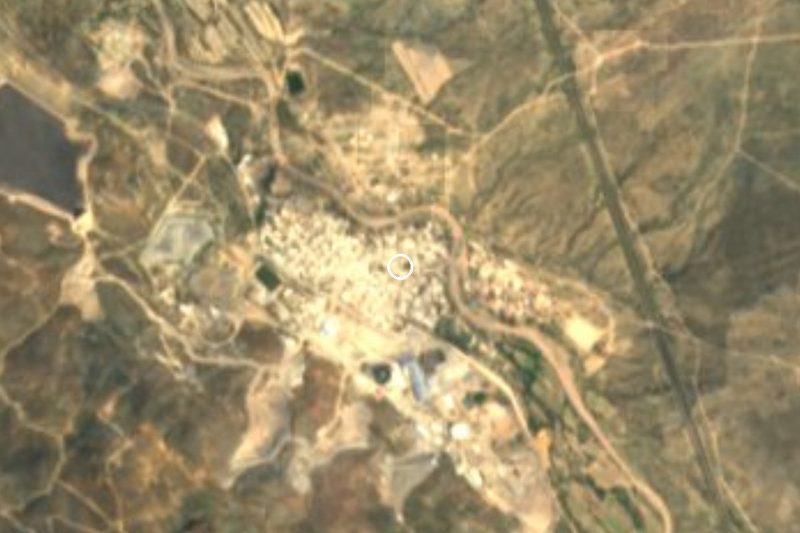

Near Cuencamé


Drive times by road from OpenStreetMap, without traffic. Times marked ~ are estimated from the straight-line distance.
Location from OpenStreetMap. Written by Puebloteca.