Town Santiago Suchilquitongo, Oaxaca Central Valleys of Oaxaca
Etla valley town below Huijazoo, the hilltop Zapotec site of the painted Tomb 5; its community museum shows a replica of the tomb.
From Oaxaca: 30 min by car (29 km by road) How to get there ↓
Near here
See everything nearby ↓


Plan your visit to Santiago Suchilquitongo
Where to stay near Santiago Suchilquitongo
Compare hotels, posadas and guest houses in Santiago Suchilquitongo.
Tours to Santiago Suchilquitongo
Day trips around Capulálpam de Méndez sometimes stop in Santiago Suchilquitongo; a tour is the easy way to see it without a car.
 Tours from Oaxaca City
Hierve el Agua 2.5 hours, Mitla, Tule, Rugs and Mezcal for a Day
★ 4.9 (1,558) · From US$70
How to get to Santiago Suchilquitongo
- From Oaxaca: about 30 min by road (~29 km)
- Nearest airport: Oaxaca (OAX), 1 h 27 min by car to Capulálpam de Méndez
Links open a partner site. We may earn a commission if you book, at no cost to you.
Tours from Oaxaca City, near Santiago Suchilquitongo


Tours, prices and ratings from Viator, checked weekly. We may earn a commission if you book.
About Santiago Suchilquitongo
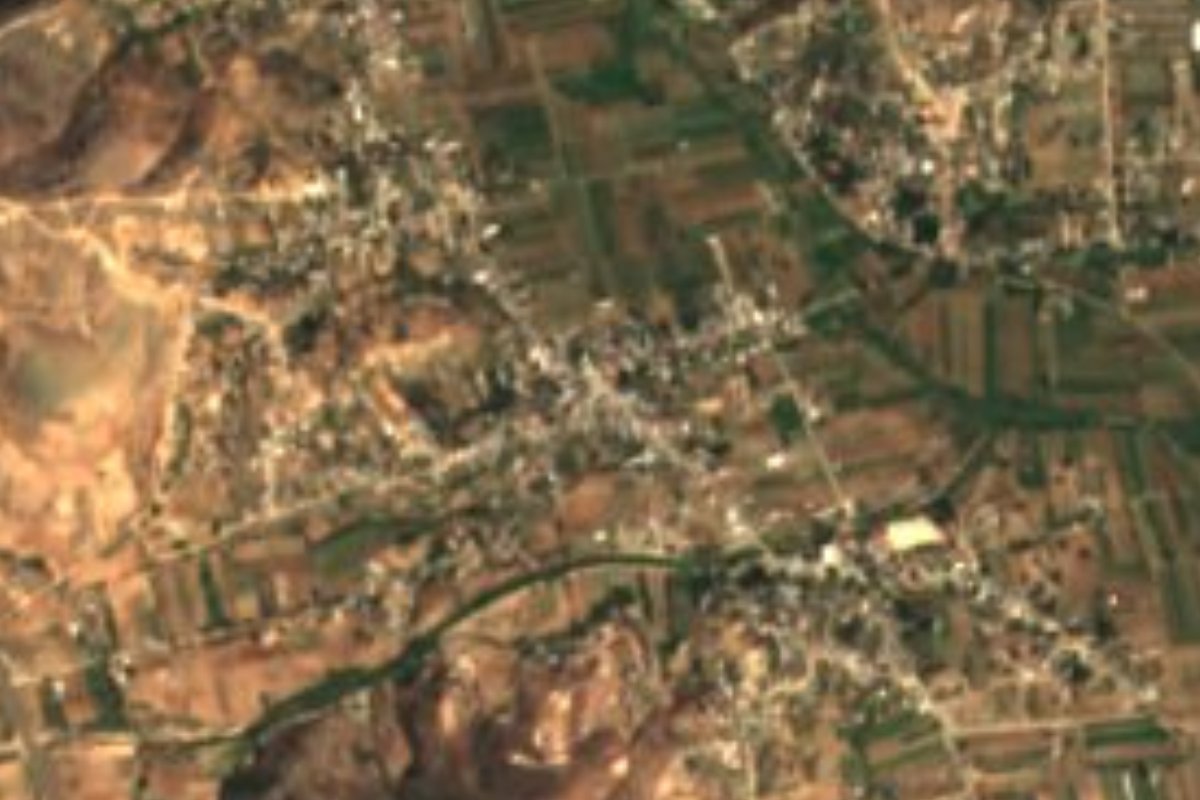
Santiago Suchilquitongo is a town at about 1,665 m in the northern Etla valley, around 30 km northwest of Oaxaca city on Federal Highway 190. It had 8,273 inhabitants in 2020. The town takes its patron from Saint James the Greater, and its Nahuatl name is usually translated as "among the flowering quelites", the wild greens still eaten across Oaxaca.
The town is best known for Huijazoo, the Zapotec ceremonial centre on the hill north of town that locals call Cerro de la Campana, after a legend of a golden bell buried inside it. The site sits about 150 m above the valley floor and has eight buildings more than 4 m high. In 1985 archaeologists found Tomb 5 there, a burial chamber more than 6 m deep whose walls keep over 40 square metres of mural painting, with around sixty painted figures, carved door jambs showing pairs of jaguar-lineage nobles, two stucco masks and painted glyphs. INAH dates the pottery from the burial to around AD 550, in the time of Monte Albán, and specialists describe Huijazoo as the seat of power that for several centuries held together the Zapotec towns of the northern Etla valley. In 2025 a second intact painted tomb, Tomb 10, was found on the same hill on the San Pablo Huitzo side.
Tomb 5 is closed to the public because its paintings are fragile, and the hilltop has no visitor services yet. In January 2026 INAH and the federal Culture Secretary inspected a visitor centre under construction at the tomb. Until it opens, the way to see Tomb 5 is through the Museo Comunitario Cerro de la Campana in the centre of Suchilquitongo, which displays a replica of the tomb along with original pieces from the site.
How to get to Santiago Suchilquitongo
Drive from Oaxaca: 30 min, 29 km
Suchilquitongo is about 30 km northwest of Oaxaca city on Federal Highway 190, the old road to Mexico City, past Villa de Etla; the drive takes around 35 minutes. Buses and colectivos from Oaxaca toward Huitzo and Telixtlahuaca pass along the highway. The Huijazoo site is on the hill about 2 km north of town by a narrow road.
Directions to Santiago Suchilquitongo on Google Maps
Distances are in a straight line; the road is usually longer.
Links open a partner site. We may earn a commission if you book, at no cost to you.
From the nearest cities to Santiago Suchilquitongo
- Oaxaca · 29 km by road, 30 min
- Huajuapan de León · 143 km by road, 2 h 5 min
- Tehuacán · 185 km by road, 2 h 15 min
Drive times by road from OpenStreetMap, without traffic or stops. Times marked ~ are estimated from the straight-line distance.
Before you go to Santiago Suchilquitongo: hours, prices and tips
- Best season
- A visitor centre at Tomb 5 was under construction in January 2026; check whether it has opened before planning a trip up the hill. INAH, boletín 40 (Jan 2026) · checked Oct 2026
- Rules
- Tomb 5 is closed to the public to protect its murals and can only be entered with INAH permission; the hilltop has no visitor services. Wikipedia · checked Oct 2026
Hours and prices change, especially around holidays. Each fact links to where we checked it.
Visiting Santiago Suchilquitongo: what to see and do
Visit the Museo Comunitario Cerro de la Campana and its replica of Tomb 5.
See original pieces recovered from the Huijazoo excavations.
Look up at Cerro de la Campana, the hill that holds the Zapotec site.
Ask in town whether the new visitor centre at Tomb 5 has opened.
Continue a few kilometres north to San Pablo Huitzo and its 16th-century Dominican church.
Plan your trip
Places to stay in Santiago Suchilquitongo
Compare hotels, posadas, and rentals in and around Santiago Suchilquitongo.
Tours & activities
Day trips around Capulálpam de Méndez sometimes stop in Santiago Suchilquitongo; a tour is the easy way to see it without a car.
Rental cars
Pick up a car at OAX (Oaxaca): about 1 h 27 min by road to Capulálpam de Méndez, then 45 km more to Santiago Suchilquitongo, on your own schedule.
Flights
The nearest airport with scheduled flights is Oaxaca (OAX), about 1 h 27 min by road from Capulálpam de Méndez, the base for Santiago Suchilquitongo.
Mobile data
Signal can drop away from Capulálpam de Méndez: download a map of the way to Santiago Suchilquitongo before you set out, or carry an eSIM with data.
Links open a partner site. We may earn a commission if you book, at no cost to you.
When to go to Santiago Suchilquitongo cool
Santiago Suchilquitongo shares the climate of Capulálpam de Méndez, 45 km away. The best months to visit are January, February, March, and December.
See the month-by-month climate of Capulálpam de Méndez
Weather in Santiago Suchilquitongo now and the next 7 days
Live forecast from Open-Meteo. Chance of rain is the day's highest.
The closest Pueblo Mágico: Capulálpam de Méndez

Capulálpam de Méndez is the Pueblo Mágico closest to Santiago Suchilquitongo, with places to stay, food, and more to see.
Also close to
- Mitla · Oaxaca · 65 km away
- Teposcolula · Oaxaca · 72 km away
Closest to Santiago Suchilquitongo
-
San Pablo Huitzo · Town · 4 km away
-
San Andrés Zautla · Town · 7 km away
-
Reyes Etla · Town · 8 km away
-
Villa de Etla · Town · 9 km away
-
Soledad Etla · Town · 10 km away
-
San José Mogote · Archaeological site · 12 km away
-
San Agustín Etla · Town · 13 km away
-
San Sebastián Sedas · Town · 13 km away


Near Santiago Suchilquitongo




Drive times by road from OpenStreetMap, without traffic. Times marked ~ are estimated from the straight-line distance.
Location from OpenStreetMap. Written by Puebloteca.